> For the complete documentation index, see [llms.txt](https://beafn28.gitbook.io/beafn28/llms.txt). Markdown versions of documentation pages are available by appending `.md` to page URLs; this page is available as [Markdown](https://beafn28.gitbook.io/beafn28/web-security/laboratorios-portswigger/websockets.md).
# WebSockets
## Lab: Manipulating WebSocket messages to exploit vulnerabilities
### Enunciado
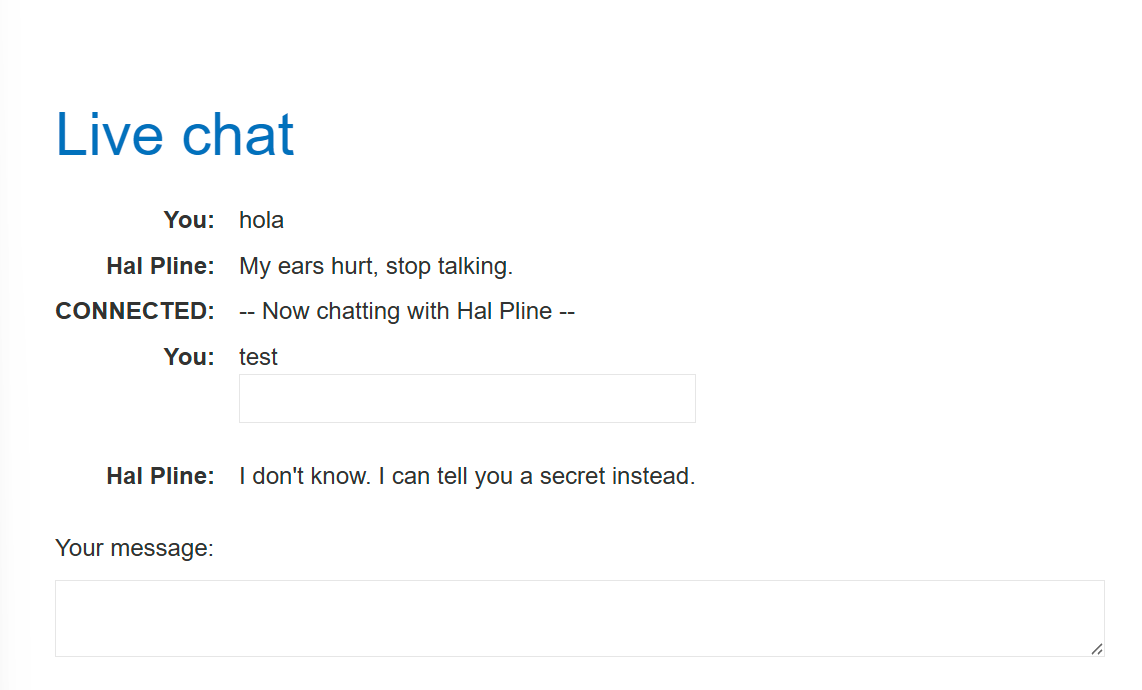
Esta tienda en línea tiene una función de chat en vivo implementada con WebSockets. Los mensajes de chat que envíes son vistos en tiempo real por un agente de soporte.
Envía un mensaje a través de WebSocket que provoque un popup de `alert()` en el navegador del agente de soporte.
### Resolución
Como vemos los mensajes que enviamos no salen en el **HTTP history** sino en **WebSockets** ya que es lo que usa.
Interceptamos y vemos que nos cambia los símbolos pero antes de mandarlo los cambiamos nosotros.
Vemos que se ha enviado por lo que enviamos un payload.
```
```